This blog explores why modern goal setting needs to be embedded directly into sales workflows and how Trella Health’s CRM Goals feature helps healthcare organizations create, track, and manage goals that drive measurable results.
In post-acute, HME, DME, and infusion sales, performance management has always depended on clear goals. Sales leaders need to know whether teams are reaching the right referral sources, growing high-value payer opportunities, completing meaningful field activity, and building momentum in the territories that matter most.
But too often, goals are managed outside the systems where daily work actually happens.
A sales manager may define targets in a spreadsheet. A rep may track progress manually. Leadership may review results in a separate report weeks later. By the time teams identify a gap, the opportunity to act may have already passed.
In today’s market, that approach is no longer enough. Healthcare organizations need goal management that is timely, visible, flexible, and connected to the workflows teams use every day.
The Problem with Disconnected Goal Tracking
Sales teams are often held accountable for outcomes that are difficult to monitor in real time. A rep may be asked to increase referrals from a specific branch, grow Medicare Advantage opportunities, complete a certain number of field events, or support a defined service line. But when the goal lives in one place and the activity lives somewhere else, performance management becomes reactive.
This creates several challenges. Managers spend valuable time chasing updates instead of coaching their teams. Reps lack a clear view of where they stand until a manager follows up or a report is shared. Leadership struggles to understand whether activity is aligned to the organization’s highest-value growth priorities.
Goal tracking becomes especially complex for organizations with multiple branches, service lines, payer strategies, and field teams. A single top-line target does not always reflect the way growth actually happens in the market.
Effective Goals Need to Reflect the Business Strategy
Modern healthcare sales goals should not be limited to broad activity counts or admit totals. They should help teams focus on the specific actions and outcomes that support business growth.
For some organizations, that may mean creating goals around referrals by business line. For others, it may mean tracking order activity, completed events, specific insurance types, or branch-level performance. Sales managers need the flexibility to define success based on the priorities that matter most to their organization.
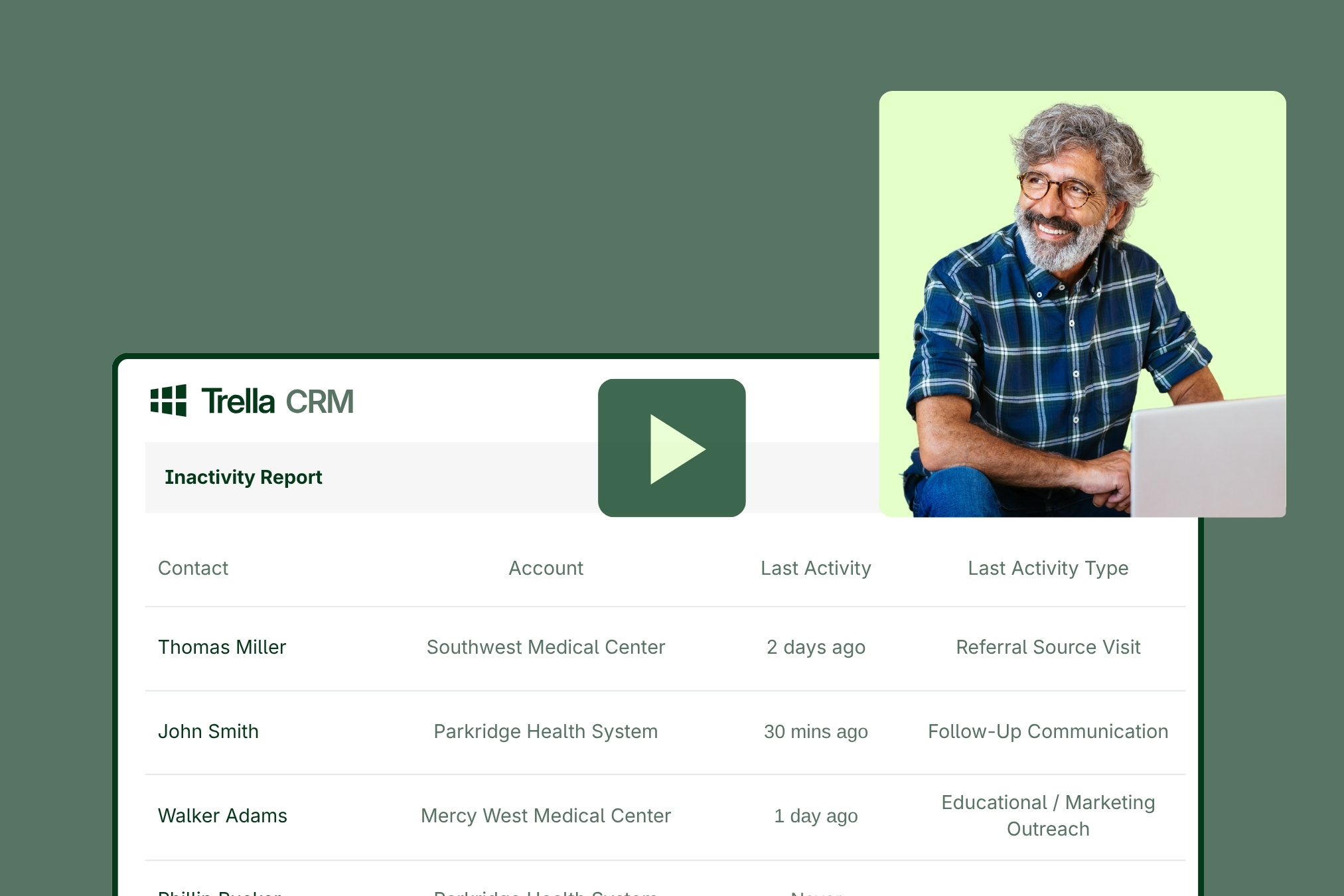
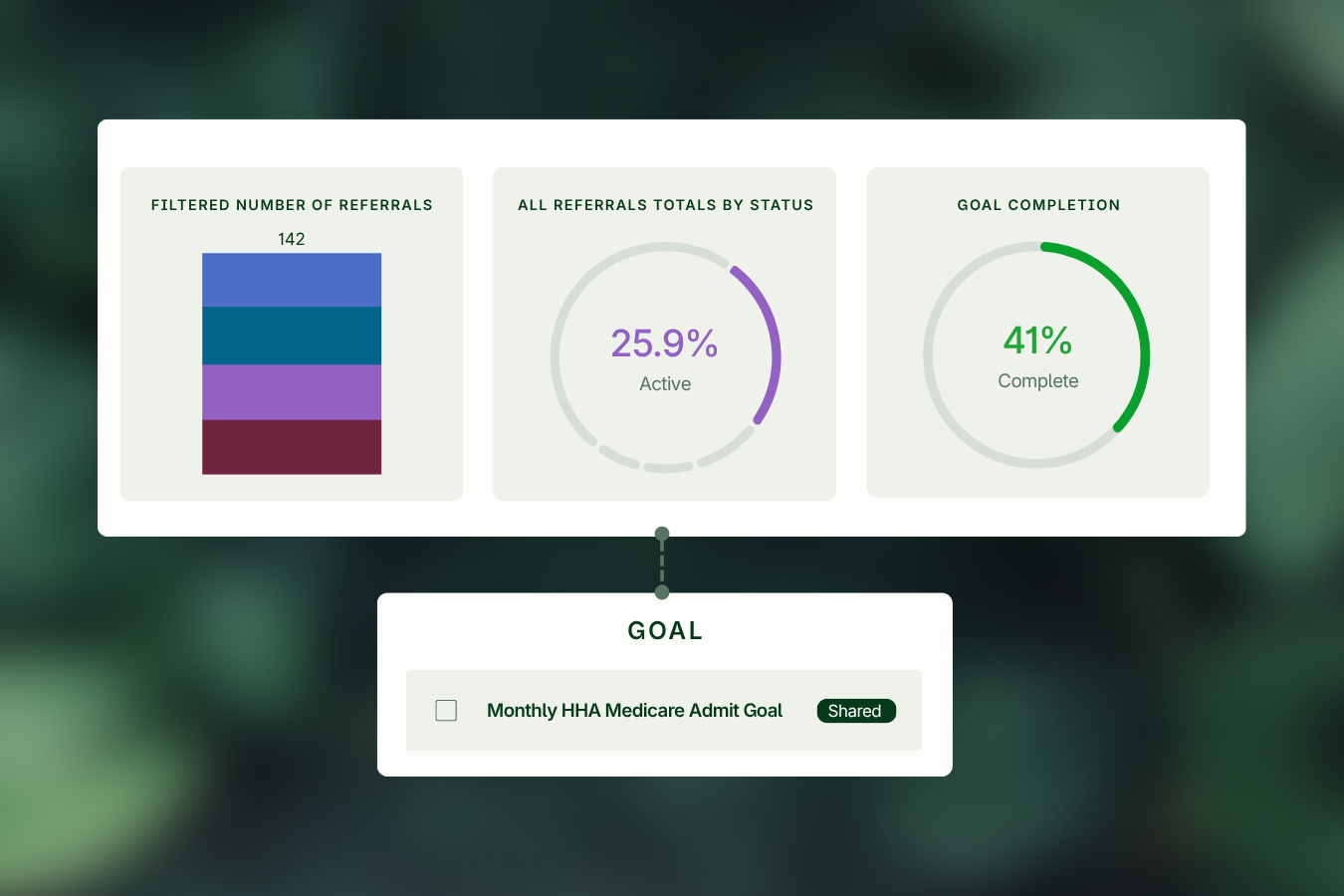
The Goals feature, available in Trella Health’s CRM, was designed around that need. The feature allows users to create individual or group goals for referrals, events, and orders, with filters that help customize goal criteria by areas such as business line, branch, referral status, insurance type, event type, completion status, and related account.
That level of customization matters because not every goal carries the same strategic weight. A team focused on improving Medicare Advantage performance may need a different target than a team focused on growing hospice referrals, expanding infusion orders, or increasing completed field events.
Visibility Turns Goals into Action
A goal is only useful if teams can see it, understand it, and act on it.
When progress is difficult to access, goals become static. They are reviewed during meetings, revisited at the end of the month, and discussed after performance has already taken shape. But when goals are visible in the CRM, they become part of daily execution.
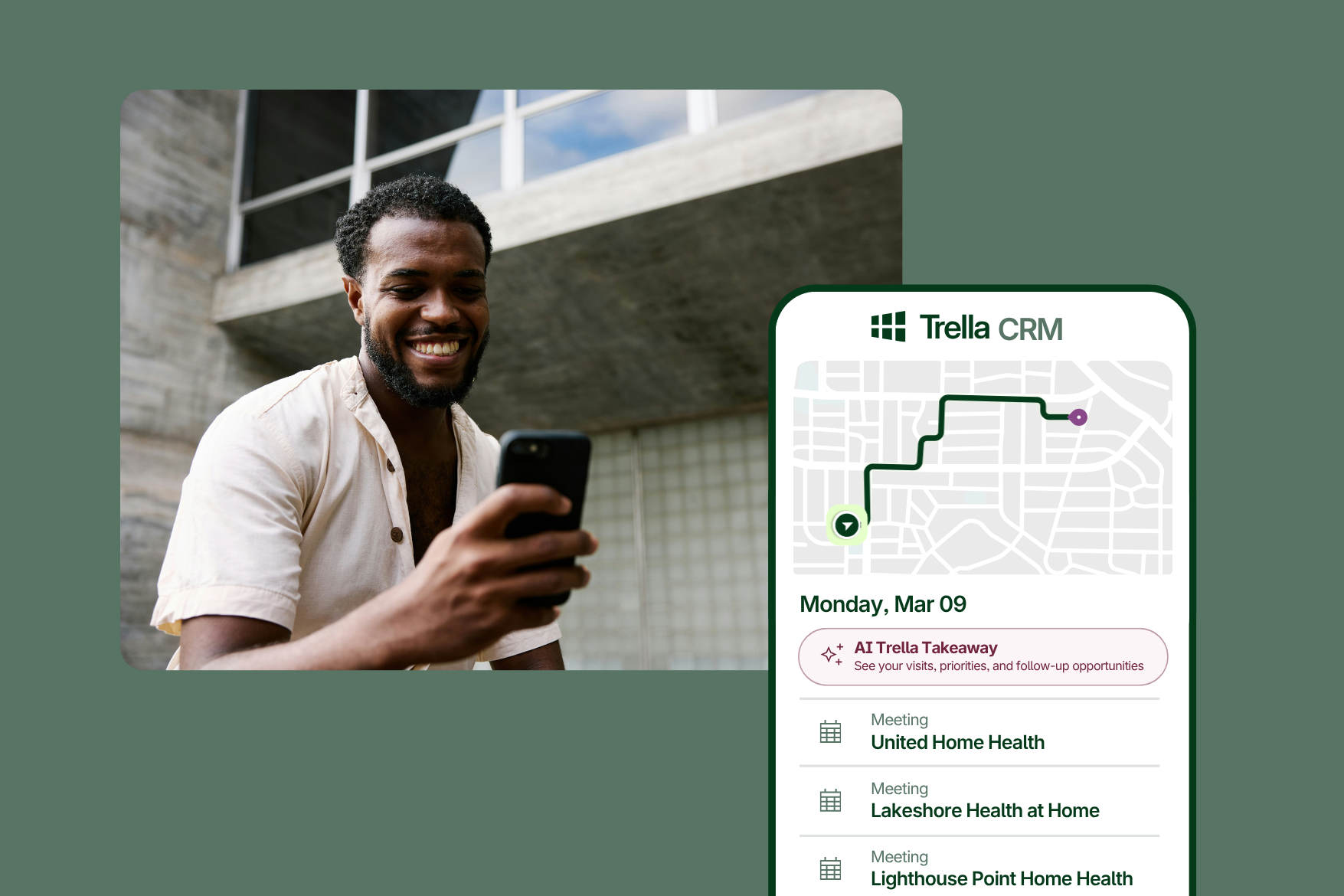
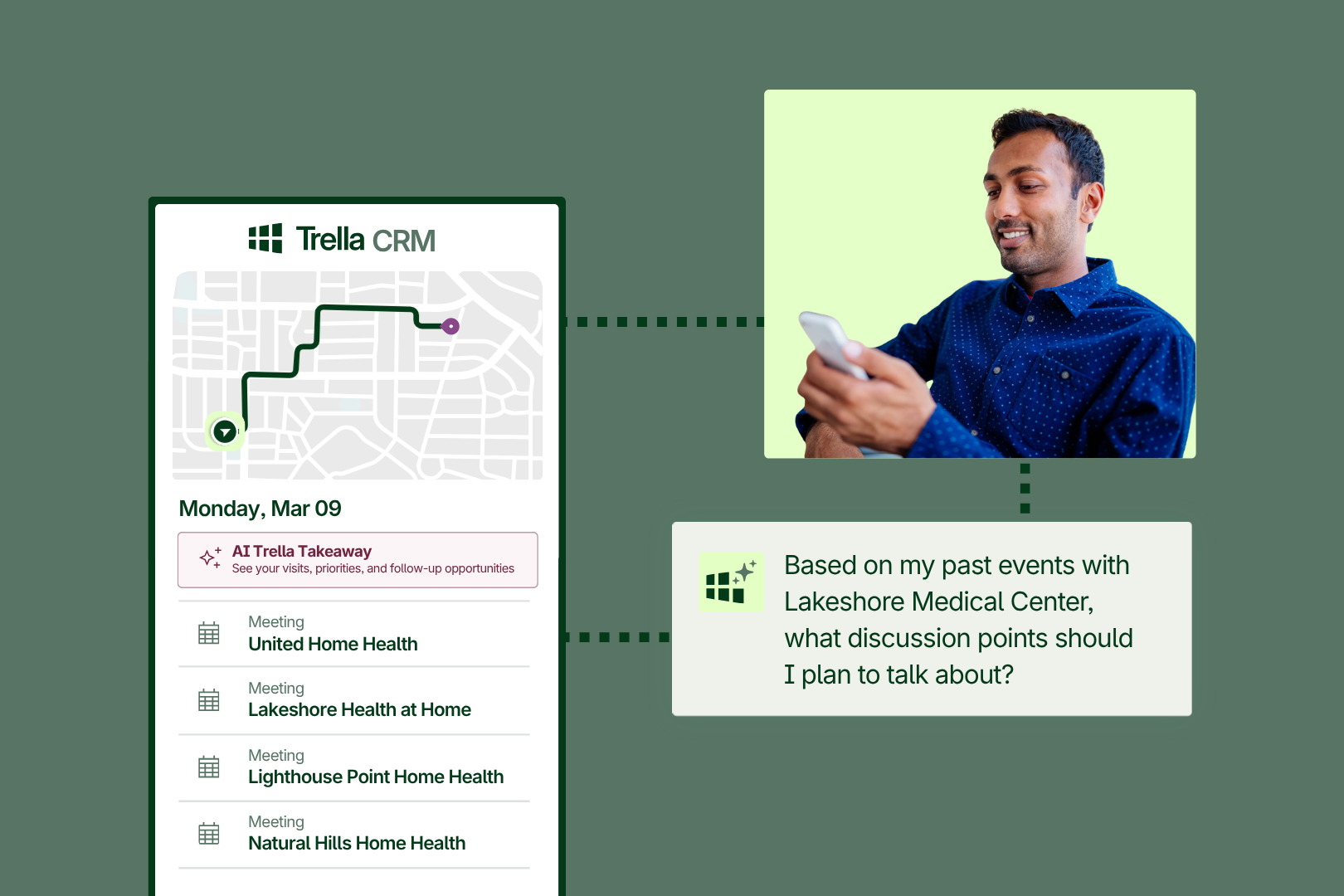
Trella Health’s CRM Goals supports both web and mobile access, giving sales reps and managers visibility whether they are at their desk or in the field. The feature provides clear performance updates, concise visuals, goal summaries, and goal details that help users understand progress against target.
This is especially important for field teams. Reps need to know where they stand while there is still time to adjust. If a referral goal is behind pace, a rep can prioritize outreach. If event activity is trending below target, a manager can step in with coaching. If a branch-specific goal is gaining momentum, leaders can identify what is working and replicate it.
Visibility changes the role of goals from a reporting exercise to a real-time performance tool.
Managers Need Clarity from Field Sales CRM Without Added Administrative Burden
Sales managers are often responsible for setting expectations, tracking performance, coaching reps, and reporting results to leadership. Without the right systems, this creates unnecessary administrative work and extra data entry. A setup like this also reflects effective field sales software for teams working on the go.
The Goals feature helps protect manager time by creating a centralized place to monitor goal achievement and clearly define expectations for field reps. Trella Health’s CRM Goals supports both web access and a mobile app, giving managers and users visibility wherever they are working. Reliable offline access is also valuable when field users are away from a stable connection. It also gives managers the ability to create personal or group goals depending on how they want to structure accountability.
That flexibility is important. A manager may want to create a private goal for one rep, a shared goal for a group, or multiple goals within a single time period. Different teams require different levels of visibility and collaboration. The right CRM should support those differences instead of forcing every team into the same goal structure.
Better Goal Management Supports Better Coaching
The best sales organizations do not use goals only to measure outcomes. They use goals to guide coaching.
When managers can see progress more clearly, conversations become more specific. Instead of asking, “How are things going this month?” a manager can discuss whether the rep is on track for a specific referral, order, or event goal. They can identify whether a gap is related to activity volume, account mix, payer focus, branch strategy, or follow ups.
That specificity helps managers coach earlier and more effectively. It also helps reps understand the connection between their daily actions and larger business objectives. Without the right systems, this creates unnecessary administrative work through manual updates and data entry. Automated operations save time and reduce manual errors.
For healthcare organizations operating in competitive markets, that connection is critical. Growth does not come from activity alone. It comes from aligned activity: the right outreach, to the right accounts, in the right territories, tied to the right strategic priorities.
Goal Setting Should Motivate Sales Teams in the Field
Goal management is not only about accountability. It is also about motivation.
When reps can see progress clearly, they gain a stronger sense of ownership. When goals are tied to meaningful metrics, teams understand what success looks like. When achievements are visible, progress can be recognized and celebrated.
Trella Health’s CRM Goals was built to provide greater clarity and organization by offering a single location where achievements can be viewed and celebrated. It also includes notifications and activity feed updates so users assigned to a goal are aware of new assignments and can act quickly.
That matters because sales performance is often shaped by momentum. Clear goals help teams focus. Real-time updates help them respond. Recognition helps reinforce the behaviors that lead to stronger results.
From Static Targets to Smarter Execution
Healthcare sales teams need more than goals written down at the beginning of a month or quarter. They need a way to connect goals to execution.
The future of sales performance management in healthcare will depend on systems that help teams define goals that reflect business strategy, customize targets by service line, branch, payer, status, event type, or order activity, and give managers and reps real-time visibility into progress. It will also depend on CRM workflows that support coaching conversations before performance gaps become missed targets.
For organizations navigating competitive referral markets, value-based expectations, and increasingly complex payer dynamics, this shift is essential. Goal setting cannot remain separate from day-to-day sales workflows. It needs to be embedded into the CRM where teams plan, execute, measure, and improve.
Turn Goal Tracking into Measurable Growth with Trella Health
Trella Health helps healthcare organizations turn market insight and sales activity into coordinated action. With the Goals feature, available in Trella Health’s CRM, teams can move beyond disconnected goal tracking and manage performance in the same platform they use to engage accounts, track referrals, monitor orders, and guide field activity.
By giving sales leaders the flexibility to create customized goals, track multiple objectives, monitor progress across web and mobile, and align teams around meaningful metrics, Trella Health helps organizations build a more focused, accountable, and growth-oriented sales strategy. In competitive referral markets, the future of sales performance management in healthcare will depend on systems that support referral marketing as part of a broader growth strategy.
With Trella Health CRM Goals, healthcare organizations can move beyond disconnected goal tracking and give sales teams the clarity they need to act with confidence. By creating customized goals, monitoring progress in real time, and aligning field activity to the metrics that matter most, leaders can strengthen accountability, improve coaching conversations, and drive more predictable growth across territories, branches, and service lines.
See how Trella Health can help your team turn goals into measurable growth. Request a demo today.