As workforce pressure remains top of mind for health systems, many organizations are looking to automation technology to address staff burnout and increase patient satisfaction.
The case management department in hospitals is one area where there is tremendous opportunity for bringing technology into workflows that have traditionally been manual and time intensive. Below, we look at the benefits of bringing automation into the case management workflow and best practices for evaluating vendors.
Most health information technology has the reputation of adding work instead of helping staff, but there is growing optimism that automation can be a key part of the solution to the staffing shortage so many health system case management departments are facing. It can also make things better from a workflow perspective. Case managers are ready for automation to handle the repetitive tasks that occur in the patient discharge process. In our experience working alongside case management teams, they don’t see automation as a threat to their jobs — they see it as a tool and an enabler, and they believe in its potential to transform their working experience for the better.
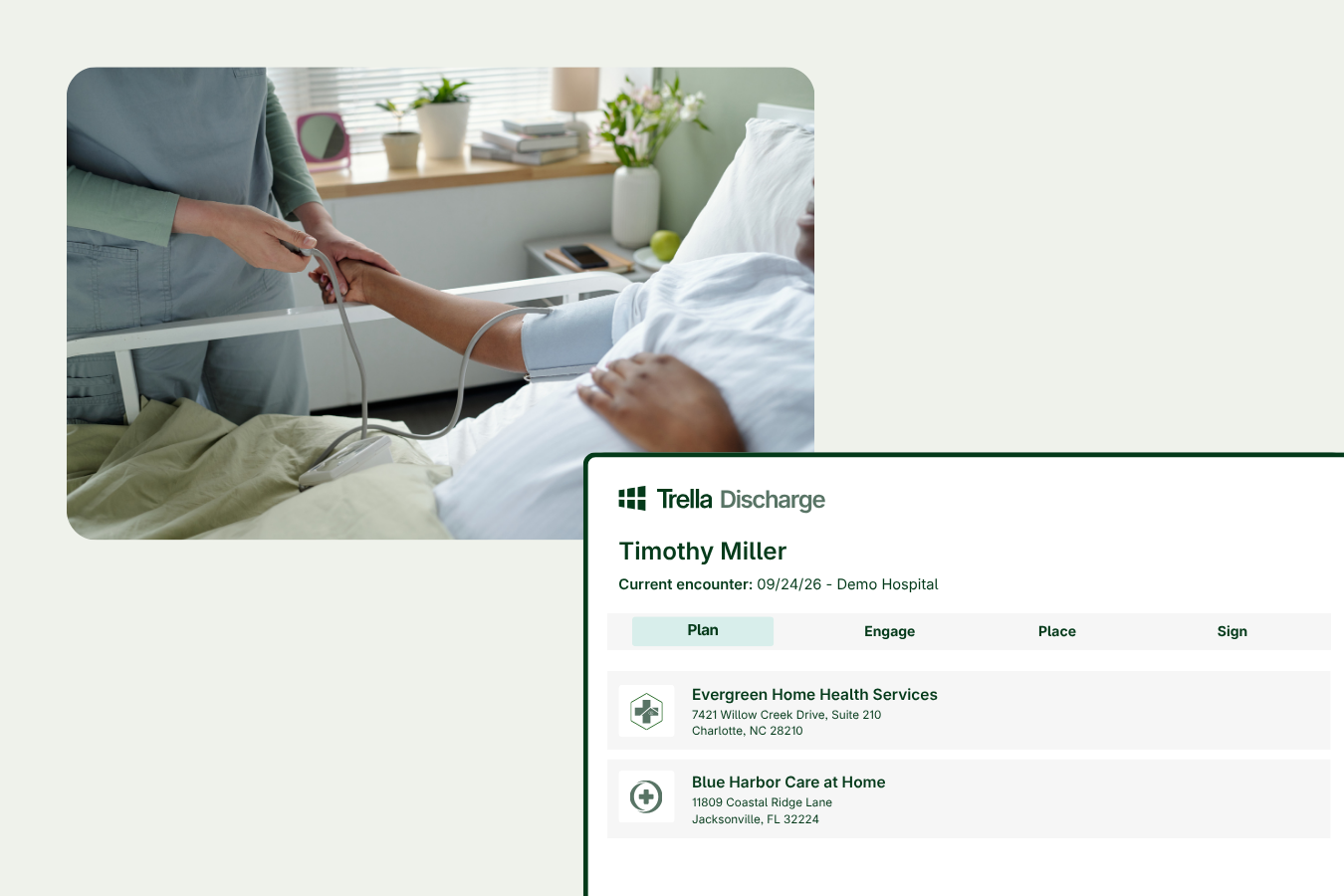
At Trella Health, we have been bringing technology into the case management workflow for years. That work expanded in 2025 when Trella Health merged with Repisodic, pairing Trella’s post-acute performance data with a hospital discharge automation platform that lives inside Epic and Oracle Health (Cerner). Across that combined experience, a few recommendations and best practices consistently separate successful implementations — the ones where staff are on board and excited from day one — from the ones that stall:
- Focus on Strategic Priorities – Case management is not just about efficiency; it is a key part of a health system’s initiatives in value-based care, such as ACOs and episode-based payment. That connection is only getting tighter: CMS’s Transforming Episode Accountability Model (TEAM) began January 1, 2026, and holds selected hospitals accountable for cost and quality through 30 days after discharge. Any effort related to technology, automation, or efficiency needs to be anchored in the broader organization’s strategic priorities.
- Understand the Actual Impact on Staff – Solutions that just check a box without solving a real problem can actually make workflows worse for downstream staff. Organizations must understand how a technology will affect everyday front-line work before moving forward.
- Rebuild Trust – There is a great deal of cynicism and skepticism about health IT, and rightfully so. It has often been a staff dissatisfier more than anything, and changing mindsets requires leaders to listen carefully and work closely with front-line staff throughout the evaluation and implementation process.
- Deliver Consumer-Facing Patient Experiences – Patients are savvy consumers of technology and have higher expectations than in the past. It is no longer a given that experiences with technology in the healthcare setting need to be miserable. Customizing and personalizing the patient choice experience is a must, and technology is a key enabler in that process.
- Automate Common and Repetitive Workflows – Case managers should be able to spend more time delivering care in front of patients and less time documenting it in front of computers.
The results show up in the numbers. Health systems using Trella’s discharge automation have seen roughly 0.5 to 1 day reduced from inpatient length of stay, 21 minutes saved per discharge to post-acute care, and 18,000 patient days returned across the customer base. Better-informed transitions also follow patients home: those who adhered to their home health discharge instructions had a 30-day readmission rate of 12.7%, compared with 15.1% for those who did not.
Repetitive tasks falling on overworked case managers create dissatisfaction and contribute to burnout and turnover. Technology can automate those processes, reduce burnout, and help ease staffing pressure in case management departments. Health IT is transitioning from a technology enabler to a strategic partner, and healthcare leaders must embrace that shift and build teams to meet the opportunity — or fall behind.
Want to see what discharge automation looks like in your workflow? Request a demo of Trella Discharge, or explore our solutions for hospitals and health systems.