
Webinar recap: Building a High-Performing Post-Acute Care Network
For years, post-acute care was something that happened after the hospital’s job was done. That framing has quietly become one of the most expensive assumptions in health care.
In a recent Trella Health webinar, Solution Engineer Stephanie Orosz was joined by Deb Karn Calvy, a career nurse and former case and utilization management leader at several health systems, and Sara Leeds, a post-acute operations expert whose background is in home health and private duty. Together they made the case that a curated, actively managed post-acute network isn’t a nice-to-have, it’s a strategic priority with measurable clinical and financial return.
Here’s what stood out.
Three numbers that frame the problem
Stephanie opened with three statistics that set the stage for the rest of the hour:
- $52.4 billion — the annual cost to the U.S. health care system of 30-day hospital readmissions.
- 2x — between 2019 and 2024, length of stay before discharge to a post-acute facility grew twice as fast for Medicare Advantage patients as it did for traditional Medicare, driven largely by prior authorization requirements and thin post-acute networks inside MA plans.
- 8.9 days — the average number of inpatient days before a patient is discharged to post-acute care.
That last number is the one Deb said used to stop leadership meetings. Patients discharged home or to self-care average 3.7 days. Patients discharged to post-acute average 8.9. That’s more than five extra inpatient days per episode sitting in the gap at the point of transition.
And it hasn’t recovered. National length of stay has come down off its 2022 peak but remains elevated, and the remaining gap is concentrated almost entirely at the handoff to post-acute care. As Deb put it, six years on, this is a structural feature of hospital throughput, not a lingering pandemic effect.
How Trella Helps
Building the kind of curated, high-performing post-acute network that moves these numbers requires knowing, not guessing, which providers actually deliver.
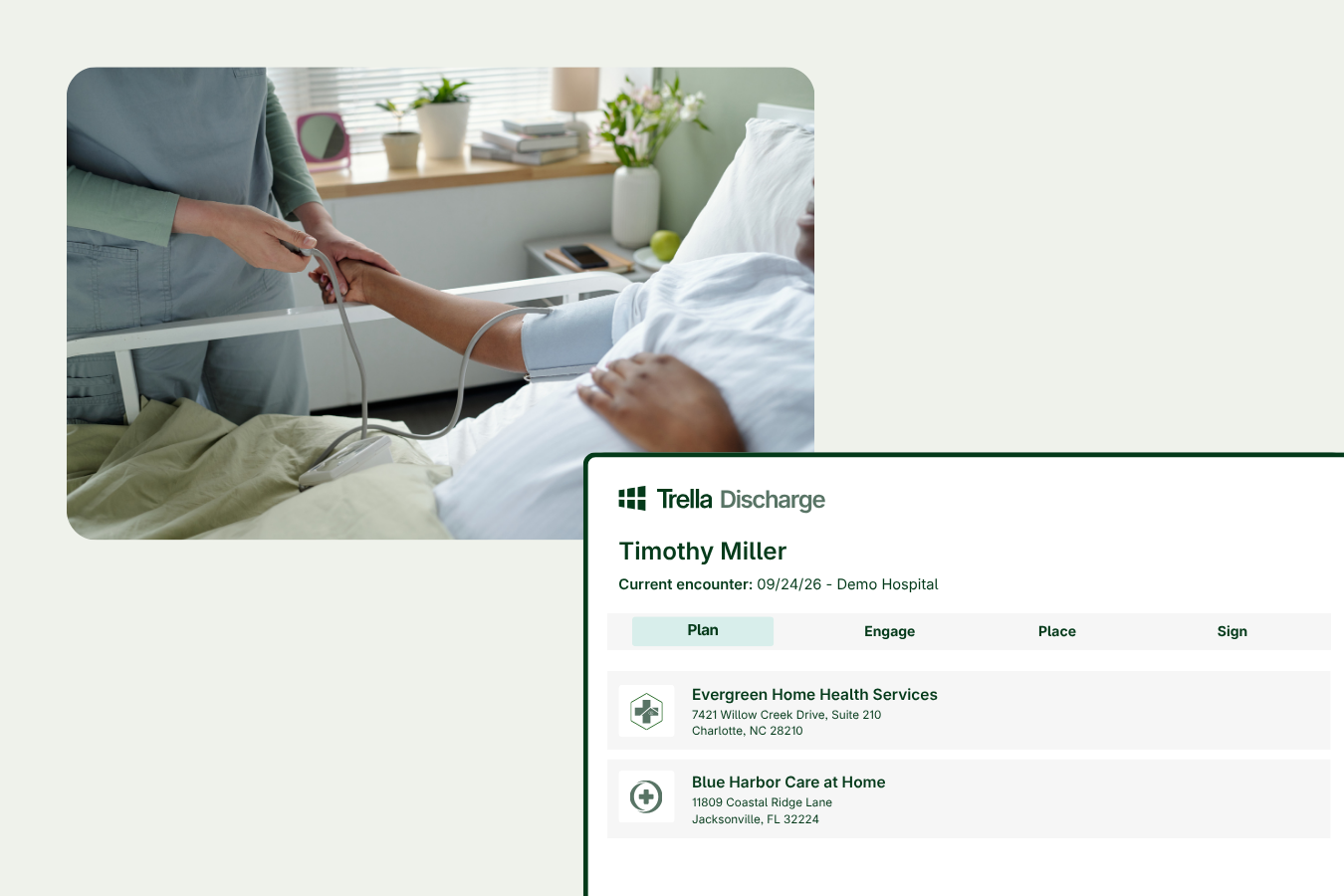
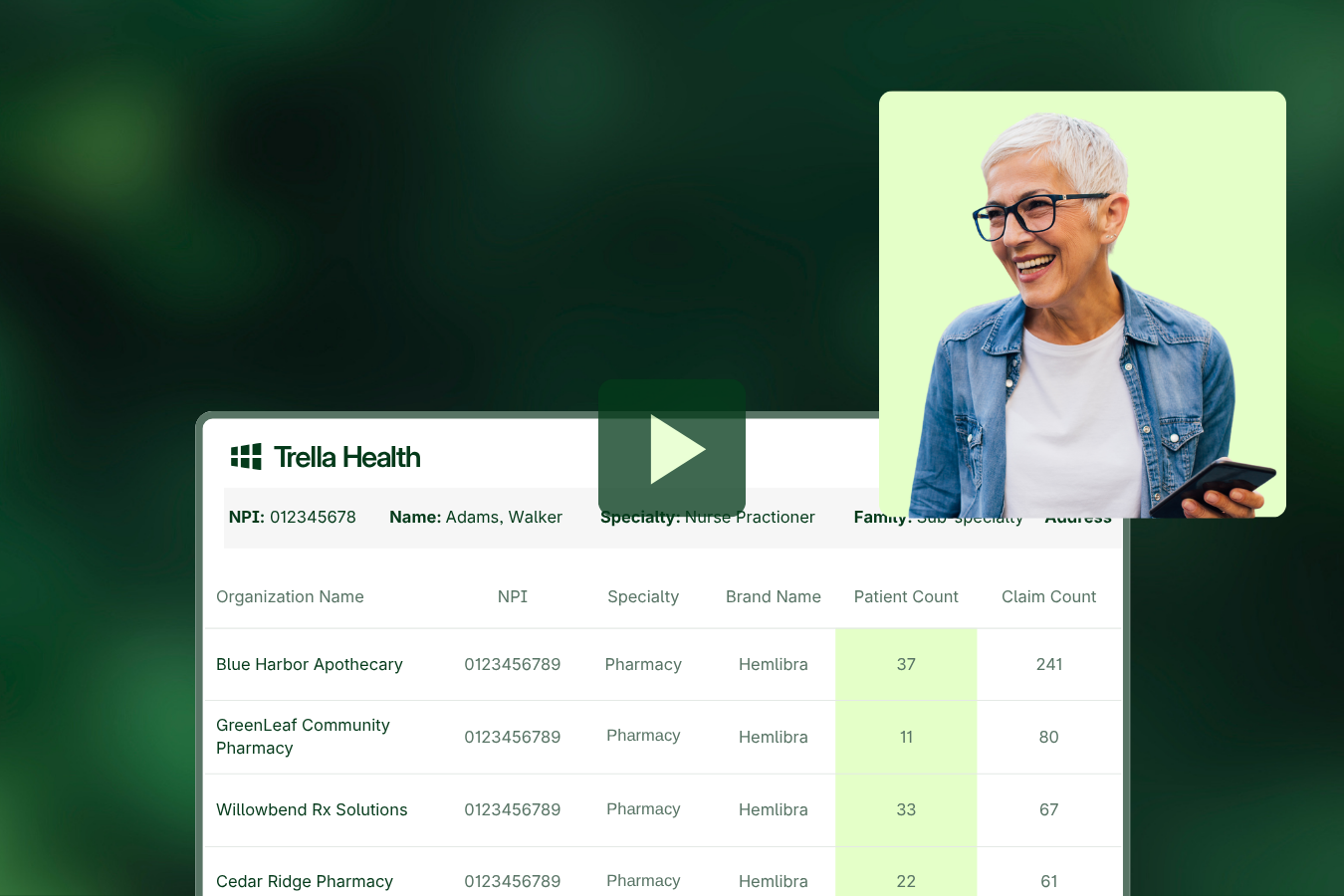
Trella Health connects fragmented Medicare and Medicare Advantage claims data into a single view of post-acute performance, so health systems can see readmission rates, average length of stay, discharge patterns, and payer mix across every SNF, home health, and hospice agency in their market. That means network decisions get made on evidence: which partners keep patients out of the hospital, which ones move Medicare Advantage patients through prior authorization efficiently, and where a patient’s eight-plus inpatient days could safely be fewer.
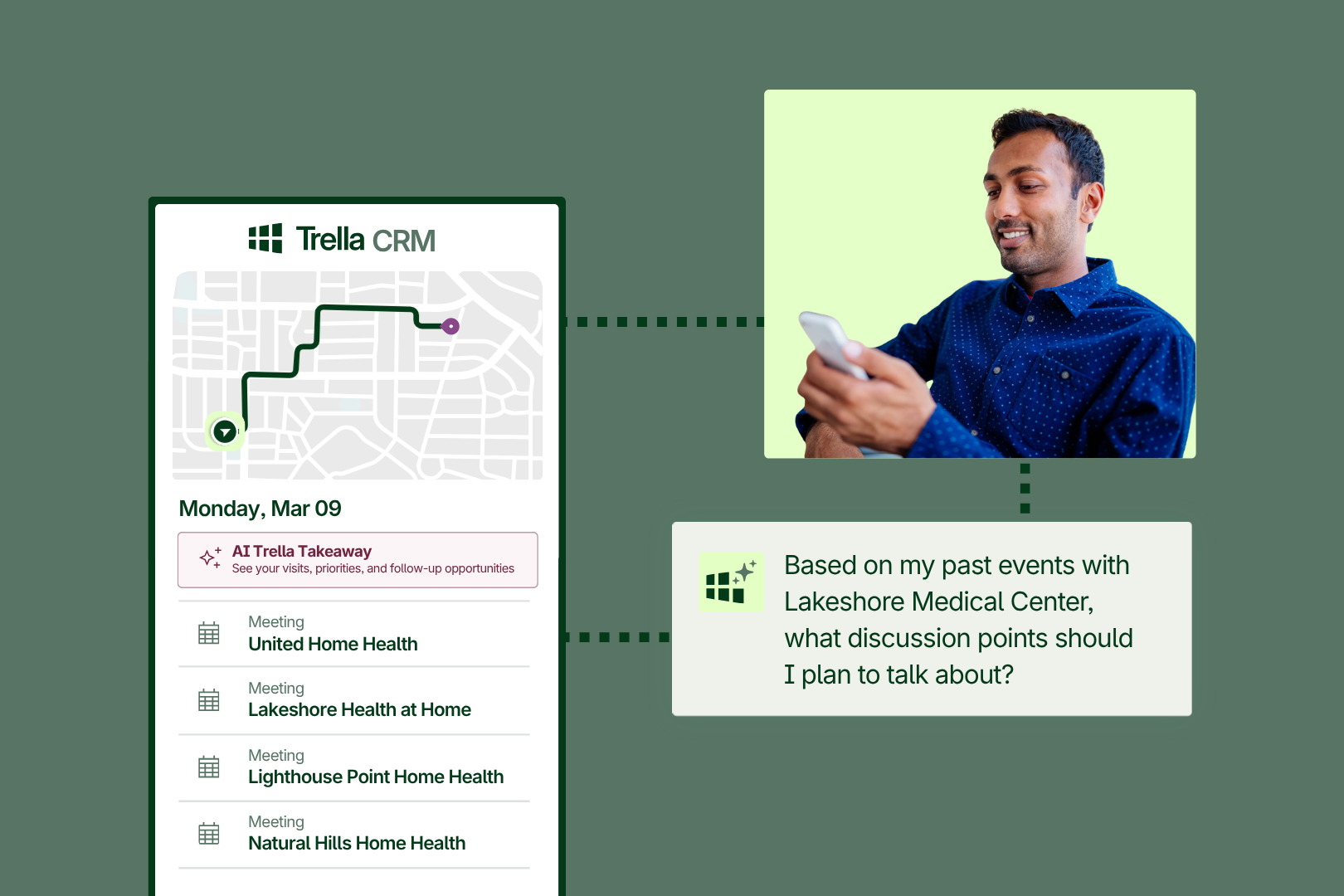
With that intelligence embedded directly in care coordination workflows, discharge planners can match each patient to the right partner at the right time turning a curated network from a strategic aspiration into a daily, measurable lever on cost, length of stay, and patient outcomes.
The headline number: 73%
If one statistic earns post-acute a spot on the executive agenda, it’s this one. Per MedPAC’s analysis, 73% of Medicare geographic spending variation is tied to post-acute utilization, not hospital care, not physician services.
“There can be a 73% difference in potential episode cost depending on whether you send a patient to SNF A or SNF B. In a value-based world where systems are on the hook for the full episode, that variation isn’t background noise. It’s a lever you can actually pull.”
- Stephanie Orosz, Solution Engineer, Trella Health
Three things are true at once right now, Deb noted. Post-acute is a fragmented handoff, with patients discharged into a maze of skilled nursing, home health, and acute rehab providers often without coordination, shared data, or accountability. It’s an undermanaged frontier, a blind spot that quietly undermines both clinical outcomes and financial performance. And the rules have changed: mandatory value-based models now hold systems accountable for total cost of care across the full episode.
What “high performing” actually means
The phrase gets used loosely enough to mean nothing. Sarah broke it into five concrete markers:
- Curated partners — a preferred set chosen on quality and outcomes, not proximity or habit.
- Shared data — real-time visibility into where patients are going, how they’re recovering, and how readmission rates trend, flowing in both directions.
- Standardized transitions — common pathways, warm handoffs, and consistent discharge protocols, with post-acute providers clear on what to report back and when.
- Aligned incentives — partners sharing accountability for readmissions, cost, experience, and start-of-care timelines.
- Active management — ongoing performance review, a real feedback loop, and network refinement when a provider is only taking the easy patients.
Asked which of the five systems miss most often, Sarah pointed to aligned incentives — and noted the gap runs both directions. Post-acute providers regularly ask her how to become a preferred partner, and her answer is that it’s a conversation to have with the health system: What are their goals? Their targets? Their expectations of you? Often neither side knows who to ask.
Where the quality gains show up
Patients discharged to a hospital’s high-performing SNF network see a 4.5% greater relative reduction in readmissions than patients discharged to non-network facilities, per Health Affairs’ analysis of formal SNF networks. Deb credited three mechanisms: warm standardized handoffs where complete records follow the patient instead of a phone call and a stack of paper; early deterioration detection, where shared real-time data lets teams intervene before an ED visit becomes a readmission; and accountable partners actually measured on readmissions rather than just included on a list.
The panel also worked through why discharge delays persist: every discharge has to clear five constraints simultaneously, capacity, clinical fit, insurance, patient choice, and current facility-level information at the point of decision. Deb’s view on which matters most: “All of them happen every day.”
How Trella Helps
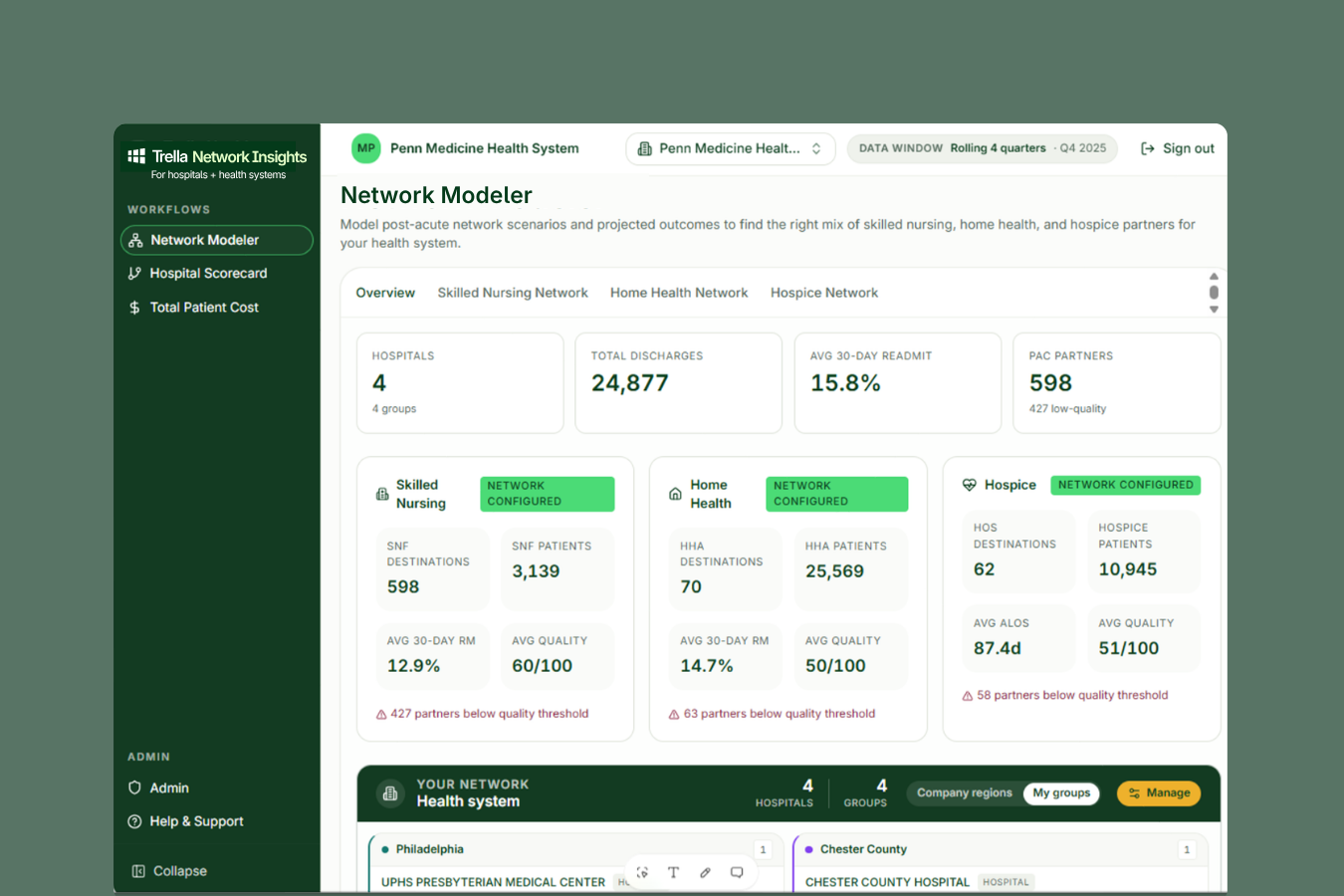
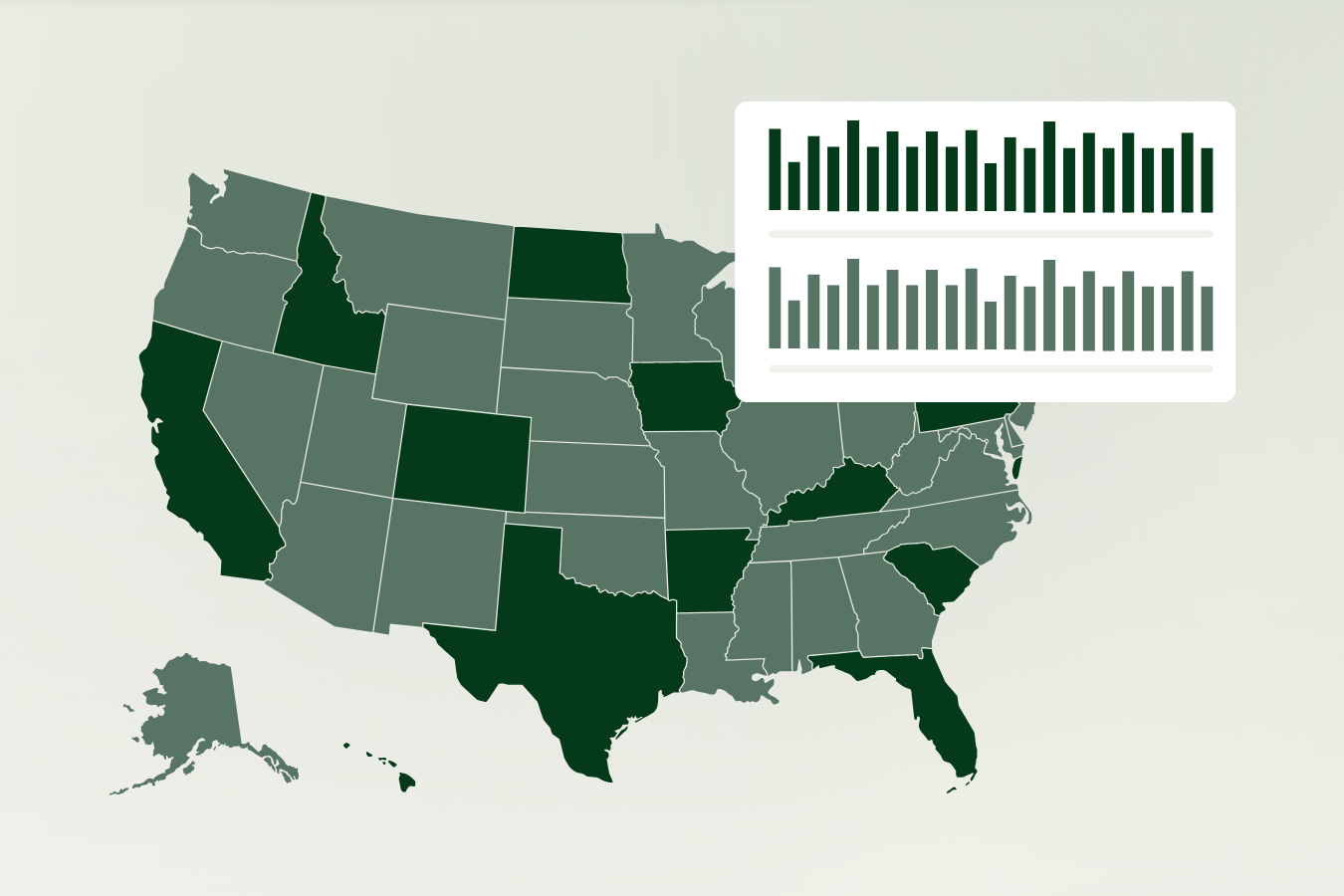
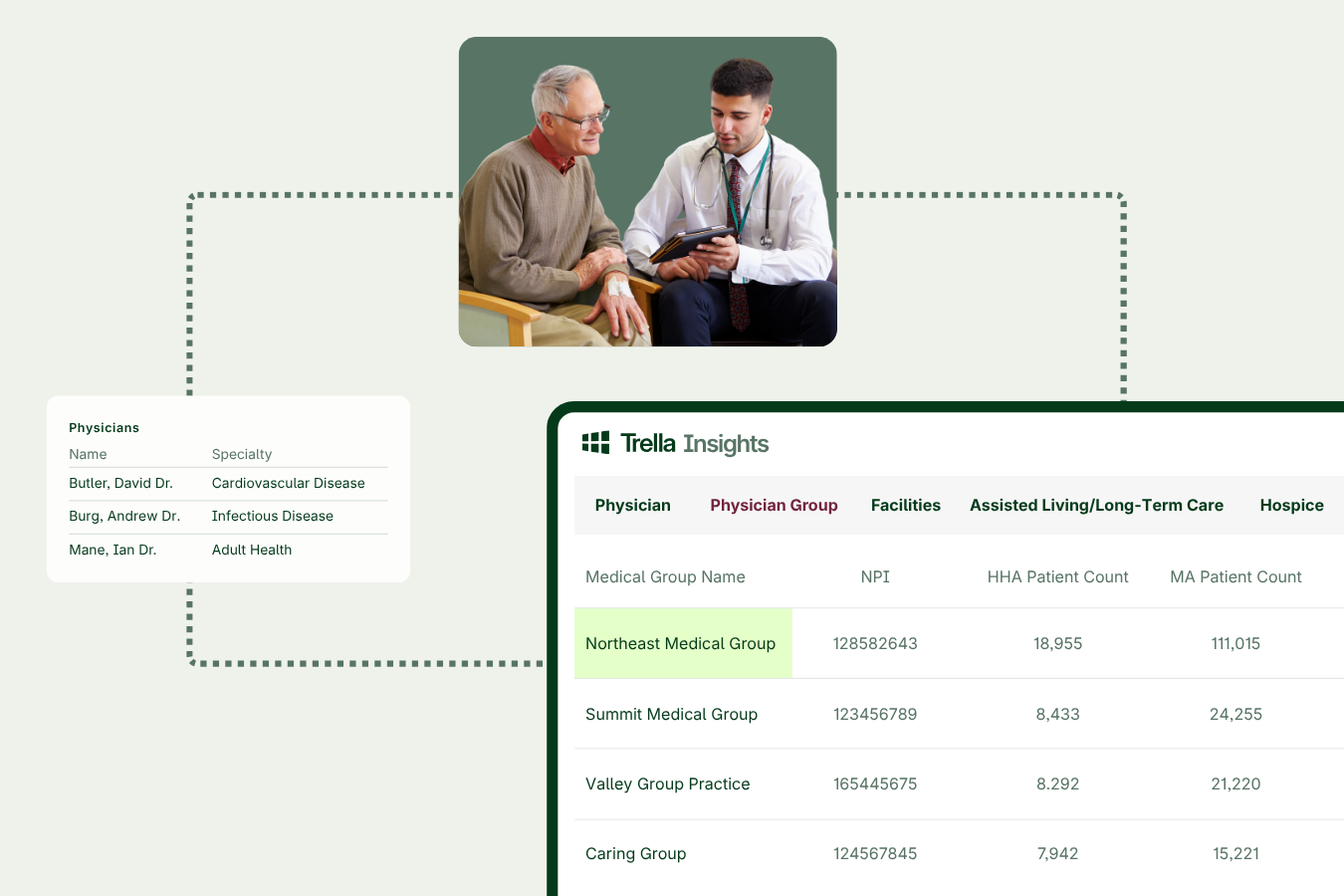
Trella Network Insights draws on 100% Medicare data coverage to show not only how post-acute providers manage your patients but how they perform across every patient they serve, so network selection rests on evidence rather than habit or proximity and its modeling tool lets you test the impact of adding or removing a provider before you make the change. On the operational side, Trella’s discharge and referral technology lets partners keep bed and clinician availability current in real time, puts accurate facility-level information in front of care managers at the point of patient choice, and captures the metrics that make a real quarterly partner review possible: response rates, timeliness, and how many referrals each provider received, accepted, declined, and why. That’s what turns a referral list into a managed network and, as Sarah framed it, into a three-way partnership that flows through to the patient and their family.
Where to start
Stephanie closed with a four-step framework:
- Market analysis — understand current referral patterns, where patients actually go, and which geographies or clinical needs are hardest to place.
- Network evaluation — assess quality (star ratings, readmissions), financial metrics (post-acute length of stay, cost per SNF day), and operational metrics like referral turnaround time and prior auth processing.
- Network design — select preferred providers against metrics that fit your market. There is no one-size-fits-all set.
- Implementation — drive volume to preferred partners while respecting patient choice, by flagging preferred providers on the choice list and giving patients the context to decide well.
Deb’s summary line is the one worth keeping: the ultimate measure of a post-acute network is a patient who returns safely and durably to the community, with a better experience along the way. Right care, right place, right time.
Watch the full session on demand to hear the complete discussion, including the panel’s take on real-time data and provider buy-in.
Then join us for the next webinar, where we’ll dig into Trella Network Insights, a new solution built on 100% Medicare data coverage that shows how post-acute providers manage your patients and all the patients they serve, and models the impact of adding or removing a provider on KPIs like readmissions.