Customer Spotlight
We recently sat down with Rod Plunkett, Vice President of Population Health Management, and Michael Brents, Division Director of Clinical Analytics and Informatics, at CHI Health at Home to learn what it is like now that they have Trella Health market intelligence solutions on their side. Plunkett has a heavy sales and business development background, while Brents is a physical therapist by trade and worked his way through various quality roles before landing in his current position as head of clinical data analytics.
Both have been with the organization for approximately eight years and have a tremendous amount of knowledge about the inner workings of one of the largest and most successful home health organizations in the industry. CHI Health At Home Overview Being part of one of the nation’s largest health systems, Catholic Health Initiative (CHI), CHI Health at Home serves 28 markets across nine states. A team of more than 100 sales representatives and leaders are responsible for working with hospital administrators, physicians, and other risk-bearing entities to ensure they understand the value CHI Health at Home can bring to the table. With such a large operation covering such a vast area, making sure everyone is armed with the right information at the right time to build the most productive relationships is the key to success.
The challenge
“When we learned that it was actual claims data that included physician data and it was easy to navigate, that’s when we knew we could extract great value from this solution.”
-Rod Plunkett, VP Population Health Management, CHI Health at Home
Prior to purchasing the Trella Health solution, CHI Health at Home used a solution that was designed to help its sales team understand referral trends from hospitals. However, the CHI Health at Home team needed more. They needed more information, such as information on physicians, facilities, private practices, post-acute referral activity (Medicare Part B) – not just hospitals (Medicare Part A). They needed more clinical data so they could dig deeper into the trends that show variations in outcomes by diagnosis codes, patient acuity, and other key influencing factors. They also needed more specific data to try to uncover broad trends across different geographical areas. And finally, they needed current data. What they were getting was 12-month-old data. By the time they received the data, manipulated it with spreadsheets and got it in the hands of their sales team, it was too late to make a difference. In addition, the system was cumbersome to navigate and difficult for their team members to understand, so it often went unused.
When Plunkett and his team learned of Trella Health and how the solution was able to deliver all of the information they needed within a few months of the claims data being filed, and it was packaged in an easy to use interface, they were intrigued. “When we first met with the Trella Health team, we saw the reports they were able to produce, and those were impressive. When we learned that it was actual claims data that included physician data and it was easy to navigate, that’s when we knew we could extract great value from this solution. All the vagueness and cloudiness we had before on dispensation data, we knew would be gone and that this was the right solution for our future,” Plunkett said.
The following Q&A session provides insight into what Plunkett and Brents had to say regarding their decision to switch to Trella Health.
Who does CHI Health at Home serve?
PLUNKETT: Most of the entities we serve have a portion of their revenue that is at risk for penalty, given the new value-based care reimbursement models that are everywhere today. I talk to a lot of hospital administrators who are getting hit with significant readmission penalties or are getting pressure from their MSSP to achieve certain quality targets for the year. In many cases, they are flying blind. They know there are gaps in care and that patients aren’t always following their discharge plans; but they don’t have proof or a sense of how severe those problems are, much less the impact those have on cost containment and quality goals. We can now come in and say, “Let’s look at which populations, which geographies or which physicians are contributing to this problem.” We can use the Trella Health data to work together on a game plan that builds smarter post-acute care strategies and processes.
“Our users feel confident that they are armed to have quality conversations in a way that we’ve never had before. No more fuzzy discharge disposition data.” – Michael Brents Divisional Director Clinical Analytics and Informatics.”
-Rod Plunkett, VP Population Health Management, CHI Health at Home
How has adoption of the solution been among your sales team members?
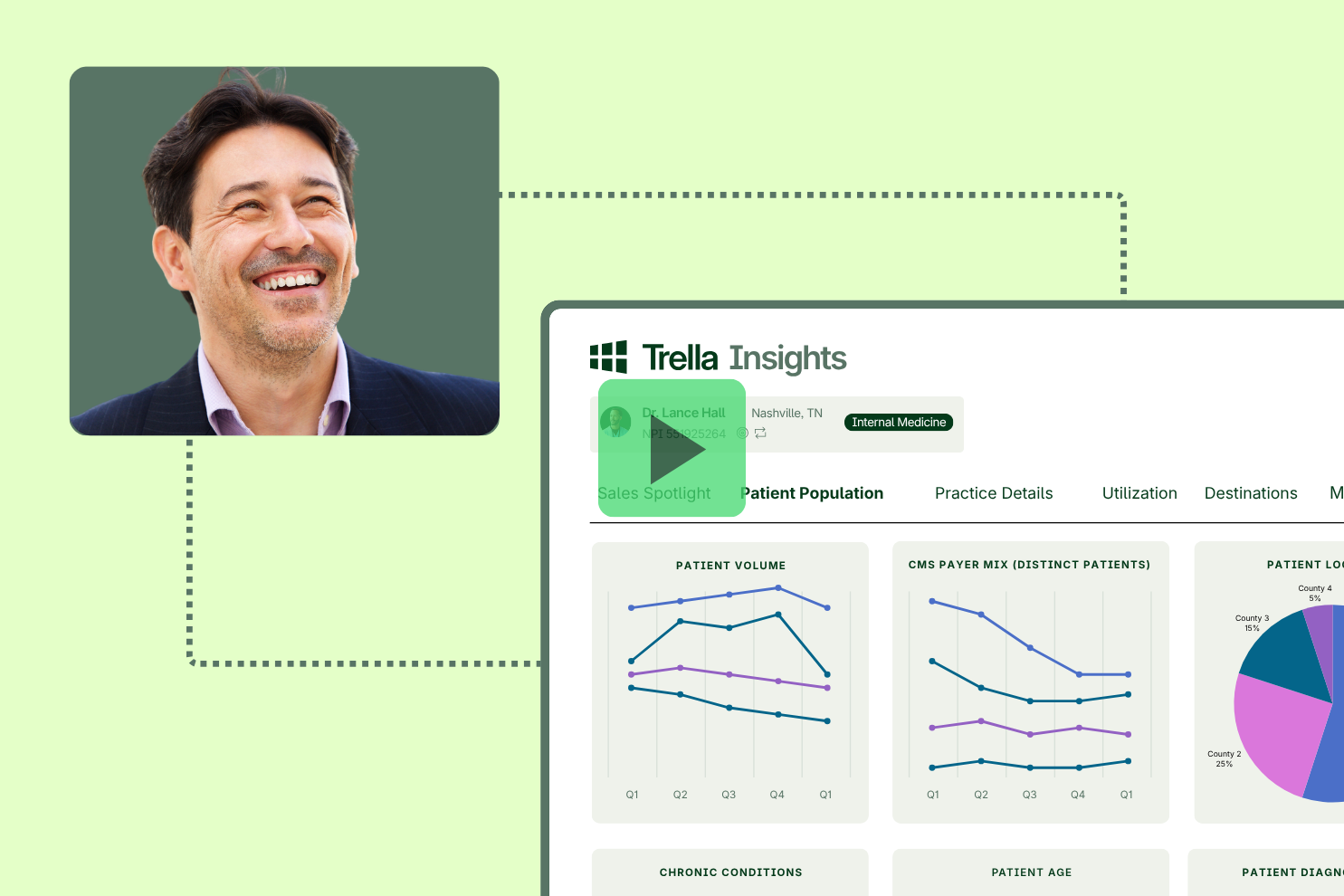
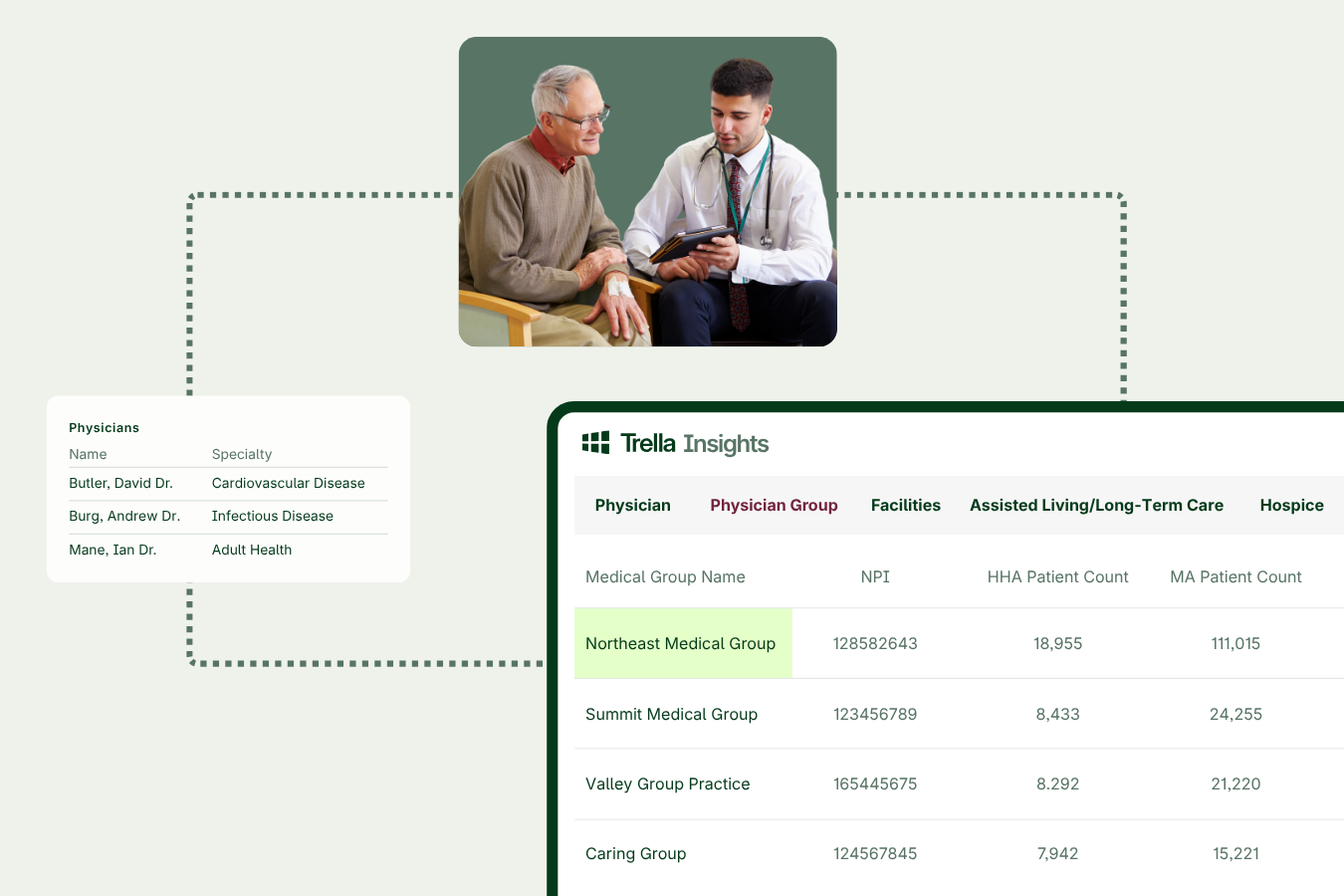
PLUNKETT: Previously, we received data either in spreadsheets that we had to manipulate or in report formats that we couldn’t manipulate. Trella Health allows you to receive information in a report format that you can easily manipulate with filters. This means that I can customize my view of the data to fit the need I have at that time. I can limit my search to specific physicians or specialties, or even to specific counties or zip codes.
BRENTS: Ease of use and adoption were critical success factors for us in our evaluation of a new vendor. With our other solution, it was cumbersome to get the information you needed, which may have been OK for someone like me or someone in finance who looks at and analyzes data all day long. But for the average end user and nonanalytics team member, it didn’t work and therefore, the system wasn’t used very much. Now with Trella Health, the simplicity of the user interface makes it easy for everyone we’ve trained to quickly start using the system. Trella Health also has built-in, tip text that pops up when the user hovers over a field, which tells the user what that data field is and how it was calculated.
What has been the response from your sales representatives and business leaders who are seeing this data for the first time?
BRENTS: The pervasive feedback is that our users feel confident that they are armed to have quality conversations in a way that we’ve never had before. No more fuzzy discharge disposition data. We’ve never had claims data like this that is so close to real time. We are still learning the power of the system, and it is early. The reality is that being armed with the data is only part of the equation. Knowing how to use it effectively is an art, not a science, and we will continue to work with our team members to position themselves and CHI Health at Home properly.
BRENTS: The pervasive feedback is that our users feel confident that they are armed to have quality conversations in a way that we’ve never had before. No more fuzzy discharge disposition data. We’ve never had claims data like this that is so close to real time. We are still learning the power of the system, and it is early. The reality is that being armed with the data is only part of the equation. Knowing how to use it effectively is an art, not a science, and we will continue to work with our team members to position themselves and CHI Health at Home properly.
“We are able to create growth plans for the year based on opportunities that we could see and ensure that we were staffed properly in the areas we identified has high growth.”
–Rodney Plunkett, VP Population Health Management, CHI Health at Home
What value metrics is CHI Health at Home tracking when it comes to incorporating the Trella Health solution into your business planning?
PLUNKETT: We are able to create growth plans for the year based on opportunities that we could see and ensure that we were staffed properly in the areas we identified has high growth. Trella Health has also given us the clarity on what we are capturing vs. what we are not in or thought we were in any given territory. In addition, it gives us a resume of how well you are doing. It directs you back to operations to show you where we stand vs. the rest of our market opportunity. Trella’s impact goes way beyond our sales team.
BRENTS: We anticipate seeing an increase in the number of Medicare admissions relative to each location, month over month. We are also hoping to better understand what we are getting out of facilities without having to rely solely on our local branches to tell us which conversations they are having. We can just look at the data and see what impact they are having. For physicians, we want to know how many admissions we’re getting from our target accounts. We think it is possible if physician data is available, we can leverage it to see an overall increase in direct physician referrals, which will help us diversify our business and makes us less reliant on acute facilities. Diversification is always good thing.
What types of insights is your organization able to get with Trella Health that you weren’t before?
PLUNKETT: Previously, most of the data we were seeing was hospital discharge disposition data, which is based on the intention of where the discharge was ordered to go. With Trella Health, for the first time I was able to see very clearly three main buckets: 1) The number of patients that landed in post-acute destinations within 30 days of discharge 2) The number of patients who had discharge instructions to go to home health, SNF or hospice 3) The number of patients who followed the instructions and landed in their intended destination One of the most telling data points the Trella Health solution shows us is the difference in readmission rates for those who had instructions and did go to home health vs. those who had instructions and did not. I can show my referral partners the actual increase in readmission rates for that population who had orders and did not go. Armed with this data, we are able to present facts, based on claims data, to help our referral sources better understand where their patients are going and how they can make improvements. In addition, I can show them clinical outcome comparisons of populations that go to our competitors and how our quality metrics measure up to their current partners.
“Whenever we submit support tickets, their response times have been blazingly fast; and their people are very friendly. They feel very accessible and that is what you want in a partner.”
–Michael Brents Divisional, Director Clinical Analytics and Informatics, CHI Health at Home
How has Trella Health helped you better serve the CHI health system of hospitals, facilities and physicians?
PLUNKETT: For our referral partners, Trella Health provides a welcome lens into their networks. It gives us visibility to see where the hospital discharge planners and physicians are sending patients and what level of care those patients are experiencing once they get there. This, in turn, helps them make better decisions about who is in their network while also helping the network partners ensure they are providing the right level of care for those patients to achieve optimal health. For our team members, Trella Health gives them more credibility when pointing out network leakage that can jeopardize the providers’ quality and cost metrics. Also, if we see a provider is getting the lions’ share of the referrals, but they have higher costs and higher readmission, we can quickly change the conversation.
How important was it for you to be able to access more recent data?
BRENTS: The latency and lag time in the data was an issue for us. When you are looking at data that is a year old, it gives you a starting point, but you always wonder what has happened lately. With Trella Health, it is still lightning quick compared to other solutions. PLUNKETT: Trella Health contains the most current data we’ve ever seen – typically within four months of the claim. Previously, our data was typically 12 months old, which only gave us the direction of the data and trends. It was not current enough to be able to see the outcomes of our efforts or our referral partners’ efforts. Now, for the first time, if there is a pilot running between the hospital and us, we can actually see the effect much more quickly, which accelerates the timeframe from pilot project to formal referral partnership.
Other solutions typically include only Medicare Part A data. Why was it important for you to see Medicare Part B claims data as well?
BRENTS: Physicians touch a lot of patients and have a lot of influence, even if they don’t sign the 485. As we have started using this data in our conversations with physicians and senior leaders in the practices, we have been able to show them information about themselves that they didn’t even know. Of particular interest to many of them is the volume of patients who were discharged with home health orders vs. the number of patients who actually landed in home health within 30 days of discharge. In one recent situation, our client relations leader had been trying to make headway with a CFO of a large physician practice for quite some time. Equipped with the Trella Health data this time, the conversation quickly became very productive as the CFO commented, “This data validates what I’ve been thinking for a long time.” He now had facts that showed him what was working and not working with the discharge planners and coordinators, in terms of following up with patients to ensure they were at the appropriate care setting. It is particularly rewarding when we can help our referral partners identify holes or areas of improvement in their processes that are necessary to hit their quality performance goals.
Tell us a little bit about what it took to get your organization up and running on the new solution?
PLUNKETT: From a training standpoint, Trella Health offers some training videos that walk you through how to run reports, which were easy to understand. We had all of our staff view those videos prior to the onsite training, and come prepared with specific questions to be asked during the training. They were able to start with the data in their territory before the trainer ever came on site. It all happened within a week, so when trainer got there, and we really felt the training was very specific to our needs and the system was easy to navigate.
How has it been working with the Trella Health team from a customer services and support standpoint?
PLUNKETT: The service has been great. We were assigned an account manager who is our primary point of contact for everything. They are always very responsive, and if we have suggestions, they are very open to listening and even providing further food for thought. We are working on a few beta programs to enhance our service and their product, which is very welcoming. That doesn’t happen with every software vendor. With the Trella Health team, they say, “Can you explain that further and we’d like to understand it better. And we will see how we can improve that.” BRENTS: I have to say that Trella feels kind of small from a customer services and support standpoint – and I mean that in a good way. Whenever we submit support tickets, their response times have been blazingly fast; and their people are very friendly. They feel very accessible and that is what you want in a partner.
What do you see are the future plans for CHI Health at Home with the Trella Health solution?
PLUNKETT: What’s interesting is that immediately when we looked at the system as a leadership team, we saw opportunities. But once we granted access to the local leaders, they saw even more opportunity, because they were able to combine this data with their local knowledge – like ownership and politics – of their territory. We feel that we are just starting to scratch the surface of the value Trella Health can bring to our organization.